
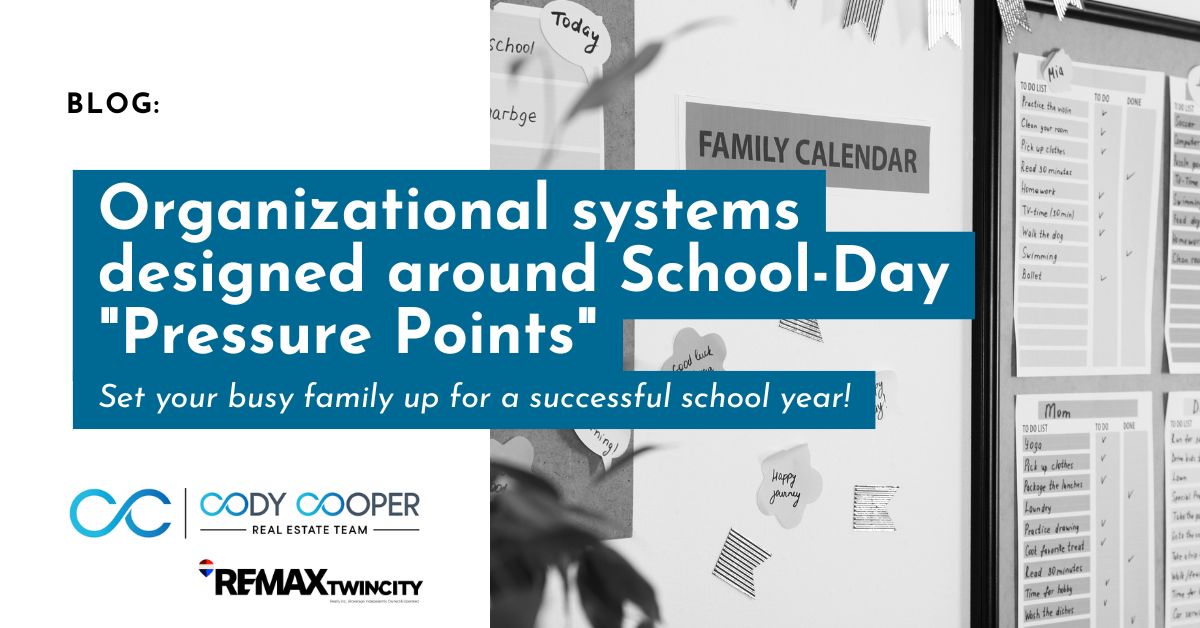
Back-to-School Home Organization Ideas for Busy Families.
Every September, families seem to organize the same things: backpacks, lunch containers, calendars, homework stations, and shoe racks.
But what if the secret to a smoother school year isn’t more storage? The solution is identifying the moments where your home creates the most friction.
Instead of organizing room by room, organize around the daily routines that tend to slow everyone down.
By creating simple “zones” for the busiest moments of the day, your home can work with your family instead of against it.
Whether you’re juggling kindergarten drop-offs, high school schedules, extracurriculars, or working from home, these ideas can help make mornings calmer and evenings more manageable.
1. The Five-Minute Launch Pad
Instead of a traditional mudroom, think of your entryway as a launch pad. Everything needed to leave the house should be within arm’s reach.
This could include:
- Individual hooks for each family member
- A basket for hats and mittens (seasonally swapped)
- Backpack parking spots
- Charging station for phones and smartwatches
- Small mirror for last-minute checks
Rather than buying matching bins immediately, work with what you have at home. After a few weeks, you’ll know what storage you actually need.
2. Create a “Landing Zone” for Paper (Not A Home Office)
School paperwork has a way of multiplying overnight. Instead of carrying everything to the kitchen counter, create one dedicated paper station near the entrance of your home.
Give every paper a dedicated spot with a next step:
- “Needs action”
- “To sign”
- “To be kept/ filed”
- Recycling (Add a small recycling bin directly underneath so papers don’t migrate through the house)
Tip: Snap photos of permission slips or artwork before filing (or recycling) them to reduce paper clutter.
3. Build a Snack Station Kids Can Manage Themselves
One of the easiest ways to recuce after-school chaos is making snacks accessible. Choose one lower cabinet or pantry shelf and stock it with:
- Granola bars
- Fruit pouches
- Crackers
- Trail mix
- Apples
- Refillable water bottles
Younger children can help pack lunches in the morning, and older kids can grab after-school snacks without emptying the pantry.
4. Design the Homework Space Around Focus…Not Furniture
A homework station doesn’t need an entire room. Instead, think about a space that reduces distractions.
Helpful additions to a homework space could include:
- A small desk lamp
- Pencil cup
- Charging dock
- Noise-reducing headphones
If multiple children share the homework space, consider using rolling carts to make it easier for everyone to keep their supplies separate.
5. Introduce a Family “Reset Basket”
Here’s an organizing trick borrowed from the professionals: Keep one basket in your main living space. Throughout the day, toss in items that belong elsewhere, such as:
- Toys
- Chargers
- Books
- Water bottles
- Socks
Spend five minutes before bedtime returning everything to its proper place. Older kids can be responsible for returning their own items to their room or a dedicated space in your home, i.e. a reading nook. You could even consider giving each family member their own small basket.
Instead of constantly carrying items around the house throughout the day, this approach enables you to contain clutter until your “reset” time.
6. Make Evenings Easier with a “Tomorrow Shelf”
This may become your family’s favourite organization habit. Choose one shelf, cabinet, or bench where everything for tomorrow sits for the night. Think: anything that has already been prepped for the next day.
This could include:
- Unrefrigerated packed lunches or snacks
- Library books
- Sports equipment
- Musical instruments
- Signed permission forms
- Jackets
- Shoes
In the morning, there’s no searching because your “tomorrow” items are already waiting for you.
7. Organize by Activity Instead of by Room
One reason homes tend to feel cluttered is that supplies for one activity end up scattered throughout the house. Instead, group items by how they’re used. For example, if you have avid swimmers in your home, rather than sending each bathing suit to a bedroom, towels in the linen closet, goggles in the garage, keep each child’s swimming items together in a bag in the mudroom, all ready to go.
Other examples:
- Soccer bin | Cleats, shin guards, water bottle, sunscreen
- Art bin | Markers, construction paper, glue, paint
- Homework kit | Calculator, highlighters, chargers, notebook
Everything leaves to get used, and then is returned together
8. Create a Family Command Centre That Actually Gets Used
Many command centres become decorative instead of functional.
Keep yours simple.
Include only:
- Weekly calendar
- Meal plan
- Important appointments
- Grocery list
- School reminders
Avoid covering every inch of your command centre with sticky notes and paper. White space makes important information easier to spot!
Small Changes Make Busy Seasons Feel Easier
Back-to-school organization isn’t about creating a picture-perfect home. It’s about reducing the number of decisions your family has to make every day.
When backpacks always have a place, snacks are easy to grab, paperwork has a destination, and tomorrow is prepared tonight, routines become smoother and stress levels naturally decrease.
The best organizational systems aren’t the most elaborate. The best systems are the ones your family can actually stick with.
As life evolves through each school year, don’t be afraid to adjust your systems. The goal isn’t perfection; it’s creating a home that supports your family’s routines and gives you more time to enjoy what matters most.
Check out these blogs too!
How To Get Your Family & Home Back Into a Routine After Summer (checklist included)
From First House to Forever Home: How KW Families Grow Into Their Space